Why do teeth shift back?
The gum fibres and bone around the teeth need time to adapt to the new position of the teeth. The gum fibres in particular continue to pull the teeth back towards their old positions for months.
In addition, teeth keep moving throughout life. With age, crowding of the lower front teeth may increase even in people who have never had orthodontic treatment. Retainers hold the teeth in place against this natural change.
Retainers
Fixed retainer wire. A thin wire bonded to the back of the front teeth. It cannot be seen from the outside and works all the time; it does not depend on you remembering to wear it. Tartar tends to build up around the wire, so regular brushing is important.
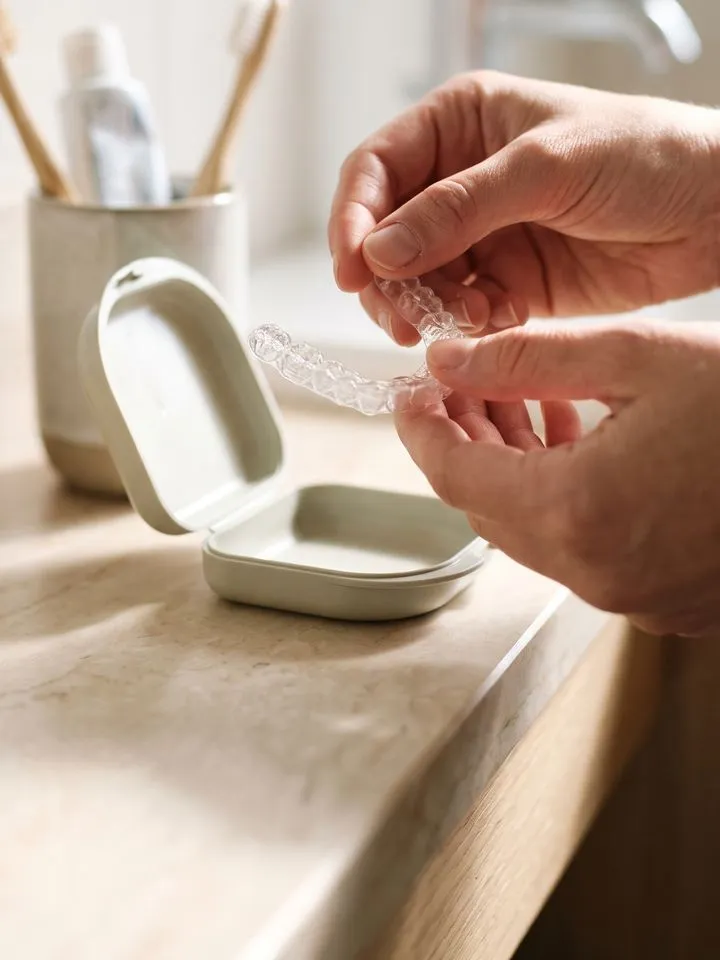
Clear retainer. A thin, transparent tray that fits exactly over the teeth. It is worn for longer in the first period after treatment, then usually only at night.
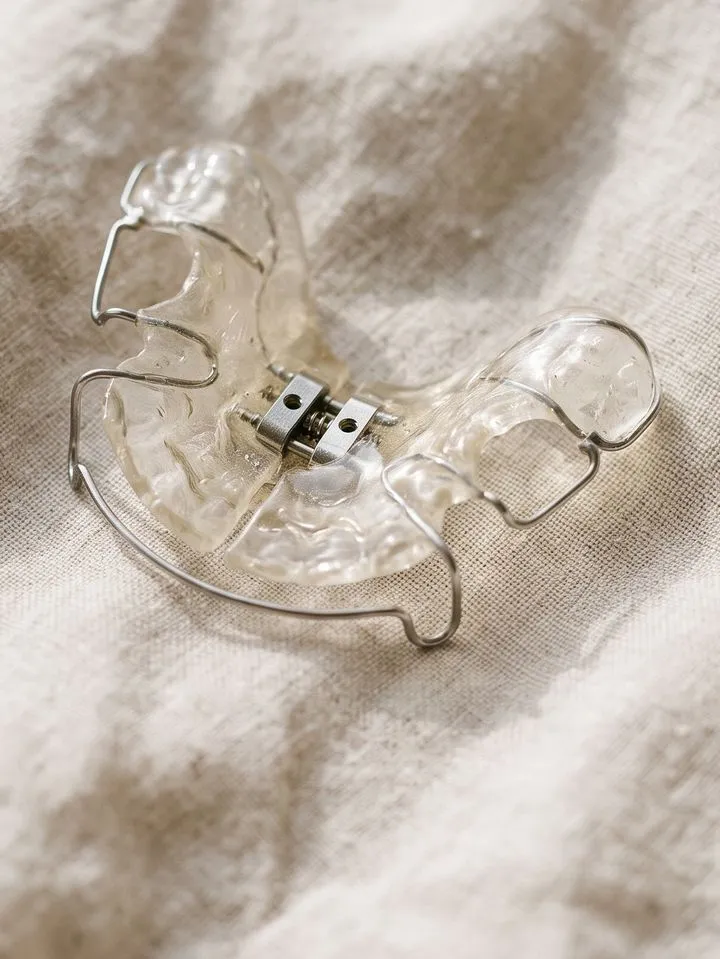
Removable retainer with a wire. Consists of a plate covering the palate or the tongue side and a wire passing in front of the front teeth. It is preferred in some situations.
Most patients use a fixed wire and a night-time retainer together. Which retainers are used depends on your situation before treatment and the type of treatment.
For how long?
Because teeth can move throughout life, long-term, often lifelong, retention is recommended today. This does not mean wearing a retainer all the time: after the first period, the retainer can be worn only at night and, over time, less often. A fixed retainer wire can stay in the mouth for years as long as it causes no problems.
What to watch out for
- If your retainer feels tight when you put it in, your teeth may have started to shift; wear it more regularly and come for a check-up.
- If one end of the fixed retainer wire has come loose or the wire has broken, call the practice without waiting. An unnoticed loose wire can let the teeth shift.
- Do not wash retainers in hot water or leave them in the sun or in a car; they can lose their shape.
- If you lose or break your retainer, contact us for a new one without delay.
I had treatment years ago and my teeth have shifted
Teeth can shift when a retainer is not used or when a fixed wire comes loose. Mild shifts can often be corrected with short clear aligner or braces treatment. After the correction, it is important to continue retention. However, small shifts may still occur despite all precautions; this is acceptable.