Why do teeth change colour?
- Surface stains: Stains left on the tooth surface by tea, coffee, smoking, red wine and some foods. Most of these are removed by scaling and polishing.
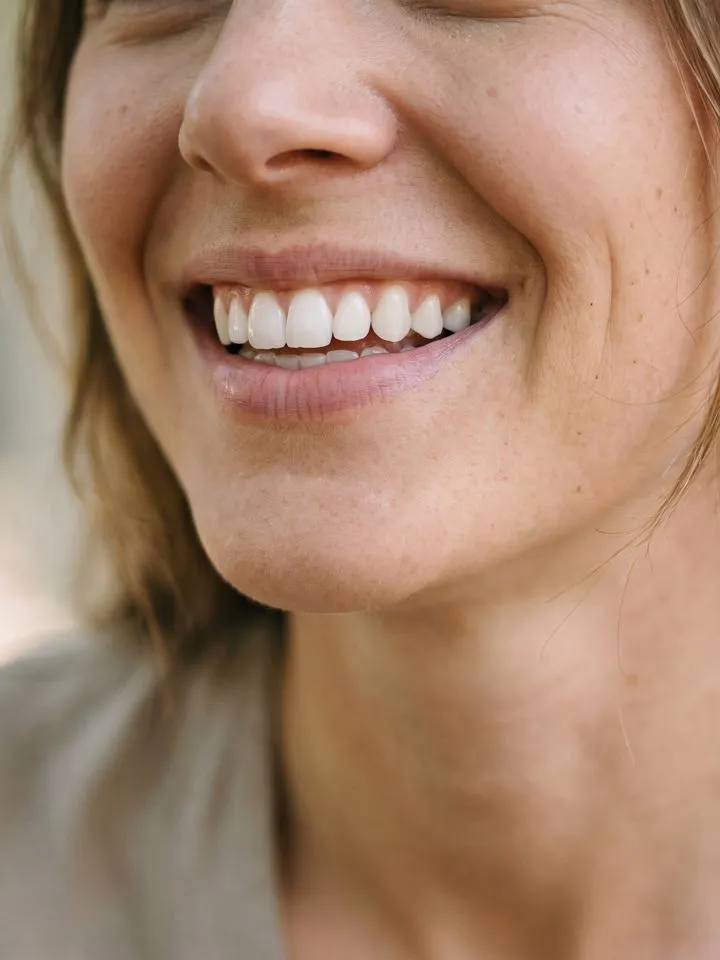
- The tooth’s own colour: Thinning of the enamel and darkening of the underlying tissue with age, and natural colour differences. Whitening is effective for this kind of discolouration.
- Special situations: Darkening of teeth that have had root canal treatment or a knock; stains due to some medicines used in childhood or to excess fluoride. In these cases the effect of whitening may be limited and other treatments may be needed.
Whitening methods
In-office whitening. After the gums are covered with a protective layer, a stronger whitening gel is applied to the teeth. The procedure takes about an hour and the effect is seen in the first session.
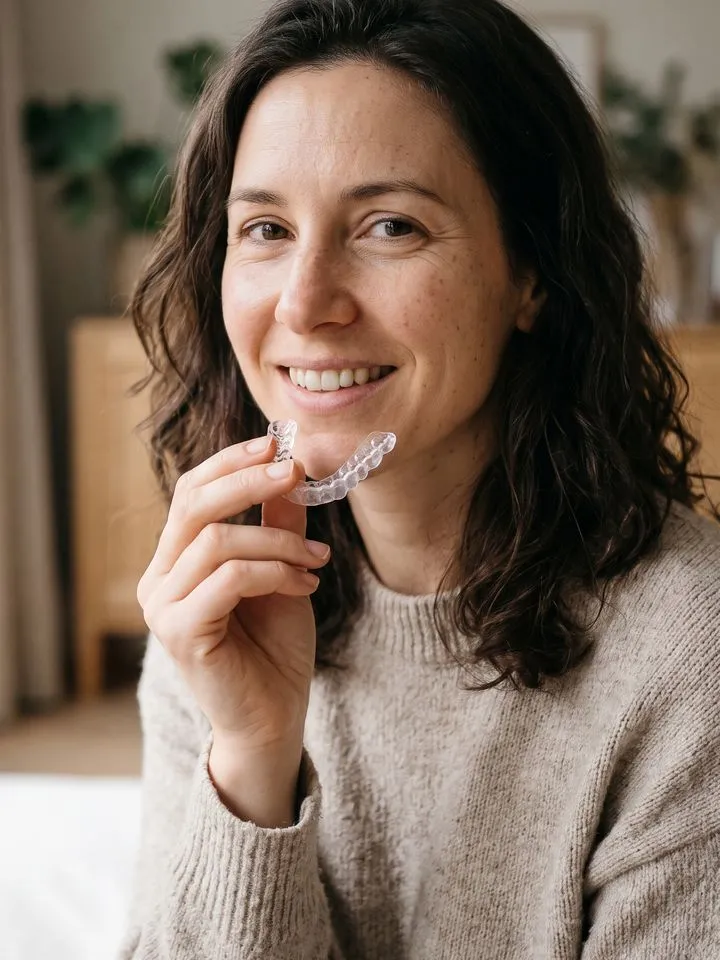
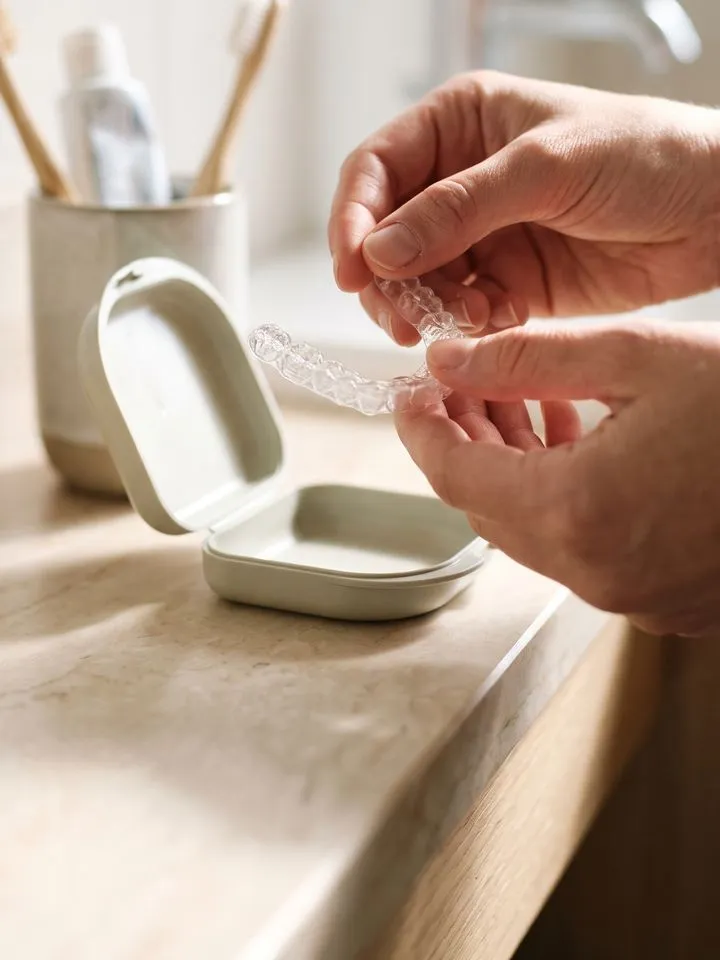
At-home whitening. Thin trays are made for you from a scan of your teeth. A small amount of low-concentration gel is placed in the trays and worn for the time your dentist recommends; the application usually lasts 1–2 weeks. The colour changes more slowly but evenly.
Both methods together. Continuing with at-home whitening after in-office whitening can strengthen the result and help maintain the colour for longer.
Who is it not suitable for?
- People under 18
- Pregnant and breastfeeding women
- People with untreated decay or gum disease; these problems are treated first
- People with marked tooth sensitivity; the cause of the sensitivity is investigated first
In people with large fillings, crowns or veneers on the front teeth, whitening does not change the colour of these restorations; they may need to be renewed after whitening.
Sensitivity and what to watch out for
During whitening and for a few days afterwards, sensitivity to cold and heat is common; it usually passes by itself. Fluoride or desensitising toothpastes may be recommended to reduce it. There may be brief, mild irritation of the gums.
For the first 48 hours after the procedure, it is recommended to avoid things that stain, such as tea, coffee, cola, red wine and smoking.
How long does it last?
The effect of whitening is not permanent; the colour darkens somewhat over time. How long the colour lasts depends on diet, smoking and oral hygiene. Occasional short applications with at-home whitening trays help maintain the colour.
Orthodontic treatment and whitening
The best time for whitening is after orthodontic treatment is finished. During treatment, the surfaces under the brackets will not be whitened, so colour differences may appear.
Home remedies
Home remedies such as charcoal powder, baking soda and lemon, and products used without a dentist’s supervision, can cause enamel wear, gum irritation and sensitivity. Whitening should be done after an oral examination and under a dentist’s supervision.