Why during growth?
The jawbones continue to grow until the end of adolescence. Forces applied during this period can influence the direction and amount of bone growth. After growth is complete, the position of the jawbones cannot be changed with appliances; for marked discrepancies, the options are limited to camouflaging the discrepancy by adjusting the position of the teeth, or jaw surgery. That is why timing is decisive in dentofacial orthopedics.
The stage of growth is assessed by looking at bone development on X-rays. In girls, the growth spurt usually happens about two years earlier than in boys.
Which problems are treated?
- A lower jaw that is set back: In profile, the chin looks set back and the upper front teeth look forward.
- An upper jaw that is set back or a lower jaw that is forward: The lower front teeth close in front of the upper front teeth.
- A narrow upper or lower jaw: Crossbite in the side teeth, dark spaces at the sides when smiling, crowding.
- Vertical discrepancies: Open bite or excessively deep bite.
Appliances used
Functional appliances. These aim to guide the growth of the lower jaw by positioning it forward. There are removable and fixed types. They are usually used when the lower jaw is set back, during the growth spurt.
Extraoral appliances (headgear). Appliances worn at home and at night, anchored to the head or the back of the neck. They can be used to slow excessive forward growth of the upper jaw or to position the molars.
Face mask. Used to guide the upper jaw forward when it is set back. It is more effective when started at an early age.
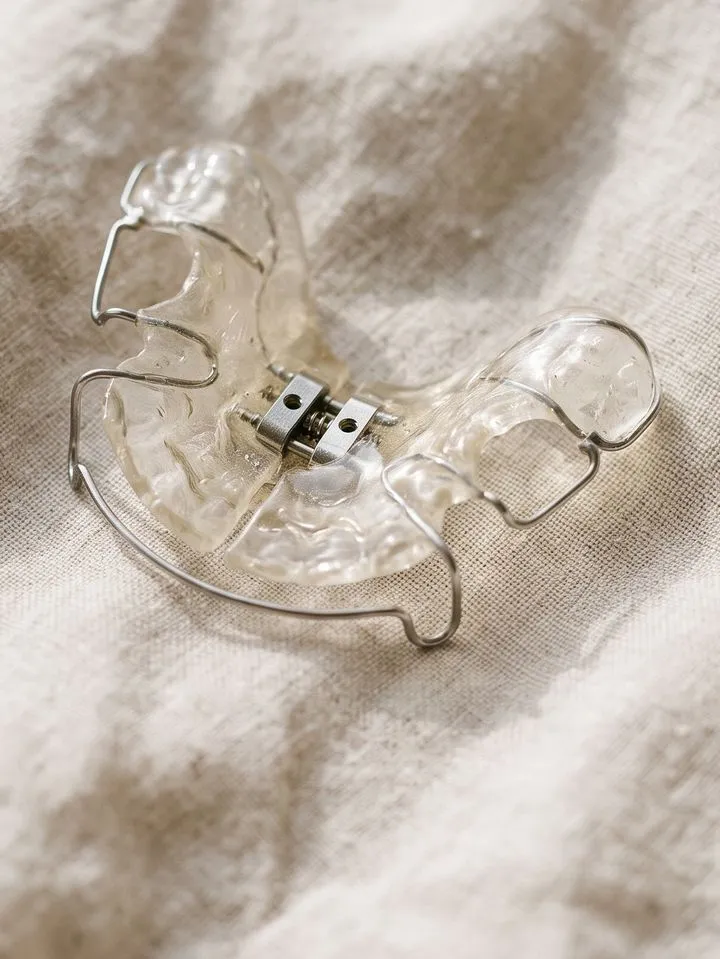
Rapid maxillary expansion (RME). A screw placed in the palate opens the growth suture in the middle of the upper jaw, widening the jaw. The screw is turned at home every day as shown to you. During expansion, a temporary gap opens between the upper front teeth; this is expected and closes later. Expansion is completed within a few weeks; the appliance is then left in the mouth for a few months while new bone forms.
Mini-screw assisted expansion (MARPE). After adolescence, the suture in the middle of the upper jaw starts to fuse, so conventional expansion appliances may not be enough. In MARPE, the expansion appliance is anchored to mini-screws placed in the palate, and it can also be used in young adults. Its success depends on age and bone structure; suitability is assessed with records including a CT scan. Some adults may need surgically assisted expansion.
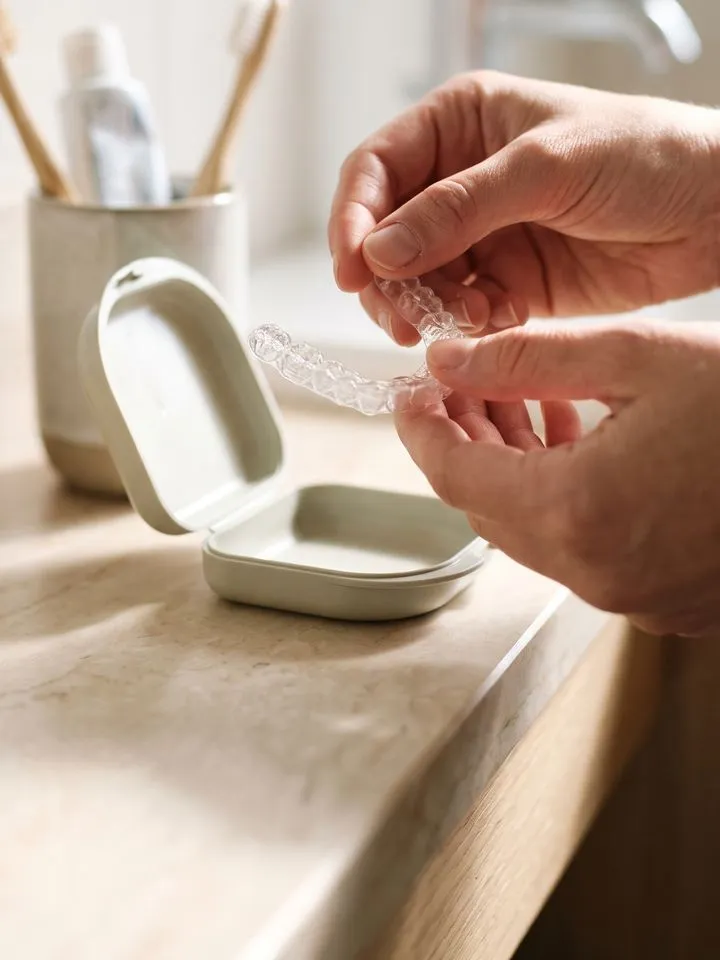
Lower jaw expansion. The lower jaw has no growth suture in the middle that can be opened like the upper jaw. Lower jaw expansion is therefore done by guiding the teeth and the bone area carrying them outwards. It is usually planned in the mixed dentition period with removable expansion plates or clear aligners, often together with upper jaw expansion. The width that can be gained is more limited than in the upper jaw.
Removable appliances. Plates that can be put in and taken out, used for simple tooth movements, stopping habits or expansion.
During treatment
Most orthopedic appliances depend on regular wear. The required wearing time is explained when the appliance is handed over; an appliance that is worn irregularly will not have the expected effect.
In the first days there may be changes in speech, increased saliva and slight tenderness; these settle within a few days. After orthopedic treatment, a second phase of treatment with braces or clear aligners is often needed for the final alignment of the teeth.