How do braces work?
Teeth are not fixed rigidly to the jawbone. Thanks to a thin layer of connective tissue around the roots, they can move within the bone when a light, continuous force is applied. On the side the force is directed to, bone is slowly resorbed; on the other side, new bone is formed. Braces make use of this natural process: brackets are bonded to the teeth, a wire is passed through the brackets, and the light force the wire creates as it tries to return to its original shape moves the teeth.
During treatment, the wires are changed from thin to thick and from flexible to stiff. When needed, auxiliary parts such as elastics between the upper and lower jaws, springs or mini-screws are also used.
Which problems are braces used for?
- Crowded, crooked or overlapping teeth
- Gaps between the teeth
- Protruding teeth, deep bite, open bite, crossbite
- Upper and lower teeth that do not meet properly
- Bringing impacted teeth (most often the canines) into position
- Moving teeth into a suitable position before implants, bridges or cosmetic dental treatment
If there is a marked mismatch in the jawbones themselves, braces are planned together with dentofacial orthopedics during growth or, when necessary, with jaw surgery in people who have finished growing.
Types of braces
Metal brackets. The most commonly used type of bracket; small and durable. The small elastics that tie the wire to the brackets are renewed at each check-up. Choosing the colour of these elastics is especially popular with children and teenagers.
Aesthetic brackets. Tooth-coloured or translucent brackets made of ceramic or similar materials. They are less noticeable from a distance.
Self-ligating brackets. Instead of an elastic, a small clip on the bracket holds the wire. They are available in metal and aesthetic versions.
Lingual orthodontics (invisible braces). The brackets are bonded to the tongue side of the teeth, so they cannot be seen from the front. In the first weeks there may be some irritation of the tongue and a slight change in speech.
Which bracket is suitable is decided by considering the condition of the teeth, the aim of treatment and your expectations together. What really determines the result is the right diagnosis and the right plan rather than the type of bracket.
How does treatment progress?
- Examination and records. The mouth is examined; photographs, X-rays and, if needed, an intraoral scan for a digital model of the teeth are taken.
- Plan. A diagnosis is made. Whether extractions are needed, the type of bracket, any appliances and the estimated treatment time are discussed with you.
- Fitting the brackets. No anaesthetic is needed; the procedure takes about 40 minutes. You are told what to pay attention to during treatment, such as eating and oral care.
- Check-ups. These take place every 4–6 weeks. Wires are changed and progress is monitored. If needed, aids such as elastics, mini-screws or fixed functional appliances are used. You can follow the stages of your treatment and your photographs in the Patient Panel.
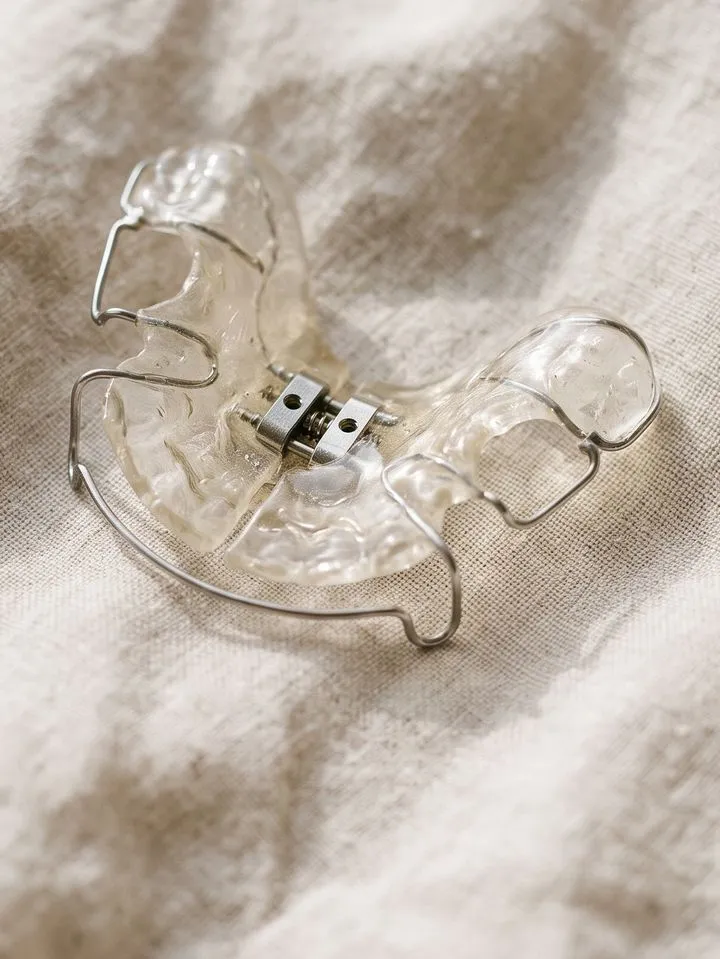
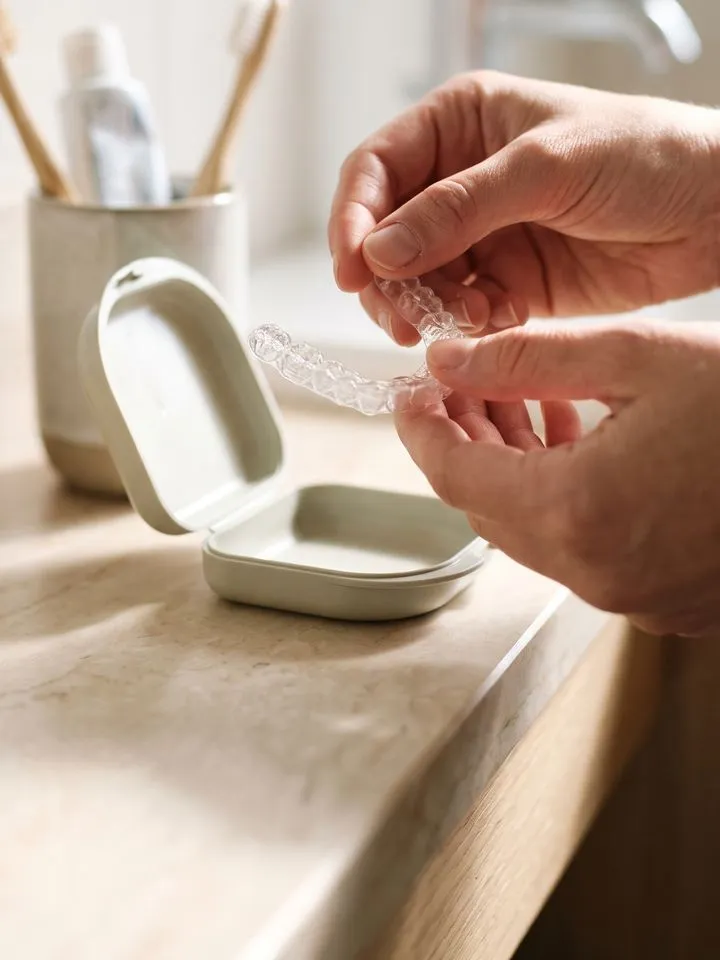
- Removing the braces and retention. The brackets are removed, the tooth surfaces are cleaned and polished, and retainers are fitted so that the teeth stay in their new positions. Check-ups continue at regular intervals during retention to see whether the teeth are shifting. In patients whose wisdom teeth have not yet erupted, their eruption is monitored; if they are likely to disturb the other teeth, removal is recommended.
The first days
For 2–4 days after the braces are fitted or tightened at a check-up, the teeth may feel tender and there may be a feeling of pressure when chewing. Soft foods can be preferred during this time; if needed, a painkiller recommended by your doctor can be taken.
Small sores may form where the brackets rub against the cheeks and lips. Orthodontic wax, given at the practice, is placed over the bracket to reduce rubbing. The mouth usually gets used to the brackets within 1–2 weeks.
Eating: what to watch out for
You can eat almost anything with braces; what matters is how you eat. To prevent brackets from coming off and wires from bending:
- Do not bite hard things such as nut shells, hard sweets, ice and bones. Hard foods can be eaten if cut into small pieces.
- Avoid sticky foods such as chewing gum, caramel and Turkish delight.
- Instead of biting foods such as apples, carrots and corn with your front teeth, cut them into small pieces and chew them with your back teeth.
- If you have a habit of biting pens or your nails, try to stop.
- Reduce sugary and acidic drinks such as cola, packaged fruit juice and energy drinks; they increase the risk of decay and stains around the brackets. Plain sparkling mineral water is fine.
Oral care: the most important part of treatment
The areas around the brackets are where food debris and bacterial plaque easily build up. If oral hygiene is poor, the gums may become inflamed and swollen, and white spots due to mineral loss from the enamel, as well as decay, may form around the brackets. These spots may be permanent after the braces are removed.
- Brush after every meal, at least twice a day, with a fluoride toothpaste.
- Clean above and below the brackets separately by holding the brush at an angle.
- Clean between the brackets and under the wire with an interdental brush.
- A water flosser does not replace brushing, but it can help.
You can watch, step by step, how to brush with braces in the video on our YouTube channel (in Turkish).
If something goes wrong
Most problems with braces are not emergencies, but they should be dealt with without delay.
- If a bracket has come loose: The bracket may slide along the wire. If it is not poking, leave it in place and call the practice to let us know, without waiting for your next check-up.
- If the end of a wire is poking: Put orthodontic wax over the end and call the practice. Do not try to cut the wire yourself.
- If an elastic has fallen off: It is usually replaced at the next check-up.
After the braces come off
Teeth tend to move back towards their old positions after treatment. That is why treatment does not end when the braces are removed; the retention period begins.