Why a first check-up at age 7?
At around the age of 7, the first permanent molars and front incisors have erupted. At this stage, the direction of jaw growth, the bite and whether there is enough space for the permanent teeth can be assessed.
Not every child needs treatment at this age; most children only need monitoring at regular intervals. The aim of the first check-up is to notice in time the situations that need early intervention.
When may early treatment be needed?
- The lower front teeth closing in front of the upper front teeth (reverse bite), or a crossbite in the side teeth
- Clearly protruding upper front teeth; the risk of fracture in falls and knocks increases
- Front teeth that do not touch when the mouth is closed (open bite)
- A narrow upper or lower jaw
- Jaws that are set back or underdeveloped
- Overdeveloped or forward jaws
- Impacted teeth
- Early loss of baby teeth or a lack of space for the permanent teeth to erupt
- Habits such as thumb sucking, tongue thrusting and mouth breathing
- Teeth that erupt late or in the wrong direction
Habits and the teeth
Thumb or dummy sucking, lip sucking, pushing the tongue against the front teeth when swallowing and constant mouth breathing can affect the development of the teeth and jaws. Prolonged thumb sucking can lead to an open bite at the front and a narrowing of the upper jaw.
If these habits are stopped early, the resulting problems may correct themselves. If the habit continues, appliances that help to stop it can be used. It is also important that children who constantly breathe through the mouth are assessed by an ear, nose and throat specialist.
Methods used in early treatment
Early treatment is usually short and targets a specific problem.
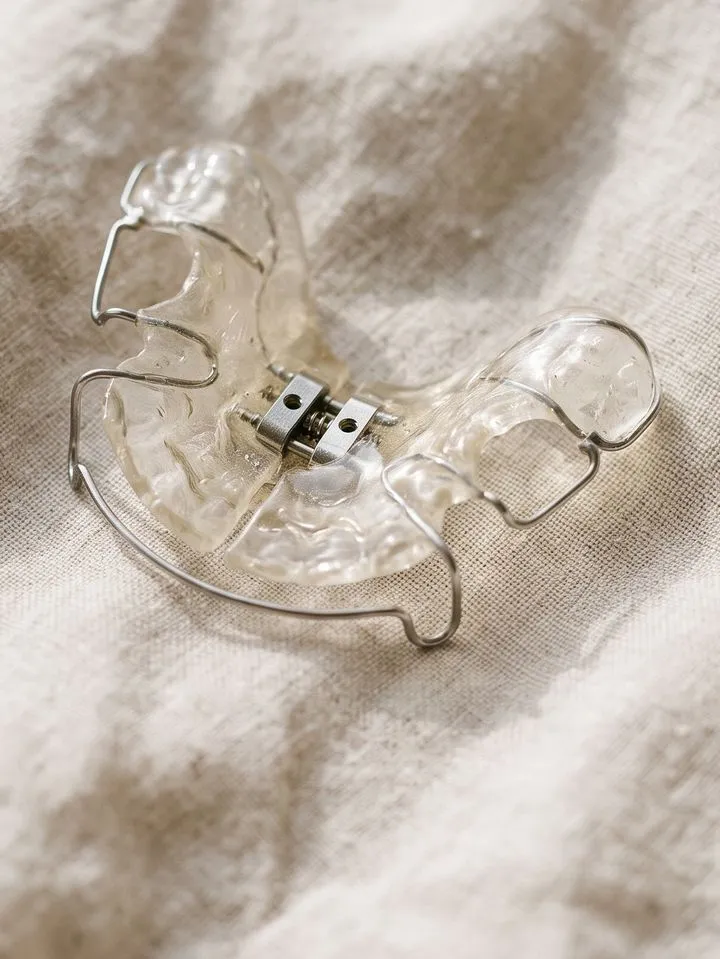
- Removable appliances: Plates that the child can put in and take out.
- Jaw expansion appliances: Widen a narrow upper jaw and, when needed, the lower jaw. Details on the dentofacial orthopedics page.
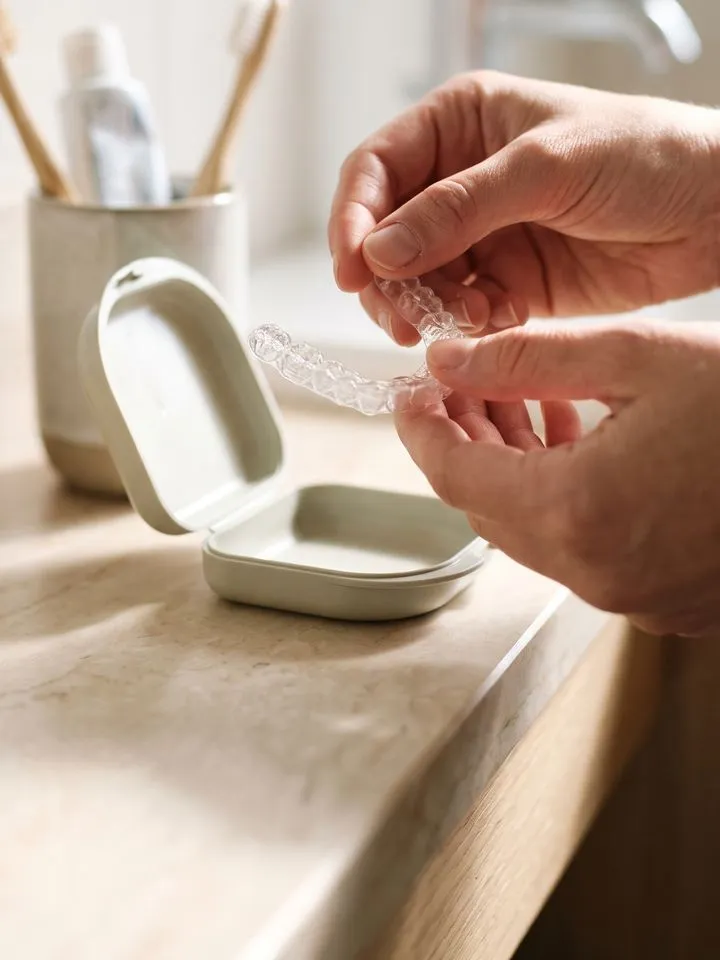
- Clear aligners: Can be used in the mixed dentition period, when baby teeth are still present, to correct crowding, widen the jaws and guide growth.
- Trainer appliances: Usually used in the mixed dentition period to help stop habits such as mouth breathing, tongue thrusting, incorrect swallowing or incorrect lip posture.
- Functional appliances: Guide the growth of the upper and lower jaws.
- Space maintainers: Keep the space of a baby tooth lost early until the permanent tooth erupts.
- Partial fixed braces: Short-term braces applied to only some teeth.
Early treatment does not mean braces will not be needed later. A second phase of treatment may be needed after all the permanent teeth have erupted; however, problems corrected early often make this phase easier.
Treatment in adolescence
The ages of 11–14, when most permanent teeth have erupted, are when comprehensive orthodontic treatment most often starts. Since growth continues at this age, it can be used to help correct discrepancies between the jaws. Braces or, in suitable cases, clear aligners are used.
Advice for parents
- Help your child with tooth brushing; oral care is even more important during treatment.
- If a removable appliance is used, check that it is worn for the recommended time.
- Have decay in baby teeth treated; baby teeth hold space for the permanent teeth.
- If a front tooth is broken, loose or displaced after a fall or knock, see a dentist without delay.
SGK orthodontic support
Patients under 18 who are covered by the Turkish Social Security Institution (SGK) can benefit from its support for orthodontic treatment. Payment is made in three stages during treatment. The documents needed to apply are prepared at our practice. A summary is on the SGK orthodontic support page.