Symptoms
- Pain in the jaw joint, in front of the ear or in the chewing muscles
- A clicking or grating noise when opening and closing the mouth
- Being unable to open the mouth fully; the jaw catching or locking
- Tiredness in the jaw and face in the morning, headaches at the temples
- Grinding the teeth at night or clenching them during the day
- Wear, fractures or sensitivity in the teeth
Causes
Jaw joint disorders often have no single cause. Clenching and grinding, stress, blows to the jaw, displacement of the disc inside the joint, wear of the joint and rheumatic joint diseases may play a role.
It has not been scientifically shown that discrepancies in the bite of the teeth alone cause jaw joint disorders.
Examination and diagnosis
Diagnosis is made by listening to your complaints, measuring mouth opening and examining the jaw joint and chewing muscles. When needed, a panoramic X-ray, a CT scan or magnetic resonance imaging (MRI) is requested. If an ear, nervous system or rheumatic disease is suspected, you are referred to the relevant specialists.
Treatment
Most jaw joint disorders improve with non-surgical, conservative methods. These are used first:
- Information and awareness of habits: Noticing and stopping habits such as clenching the teeth during the day, chewing gum, and biting nails and pens. At rest, the lips should be closed and the teeth slightly apart.
- Resting the joint: Avoiding hard foods and foods that need a lot of chewing, and not opening the mouth too wide, while complaints are intense.
- Heat and exercises: Simple exercises to relax the muscles; physiotherapy when needed.
- A custom-made splint: Depending on the complaint, a stabilisation splint (Michigan splint) or an NTI splint is used. Both are described below.
- Medication: When needed, short-term painkillers or muscle relaxants under a doctor’s supervision.
Patients who do not improve with these methods, or who have a structural problem in the joint, are referred to an oral and maxillofacial surgeon.
Splints: Michigan splint and NTI splint
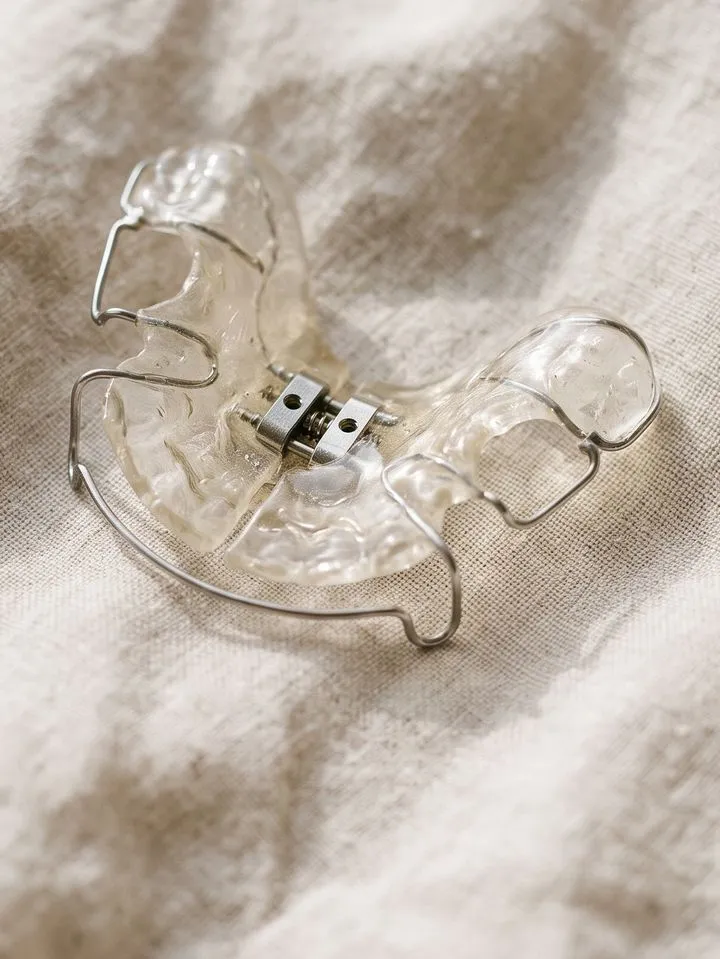
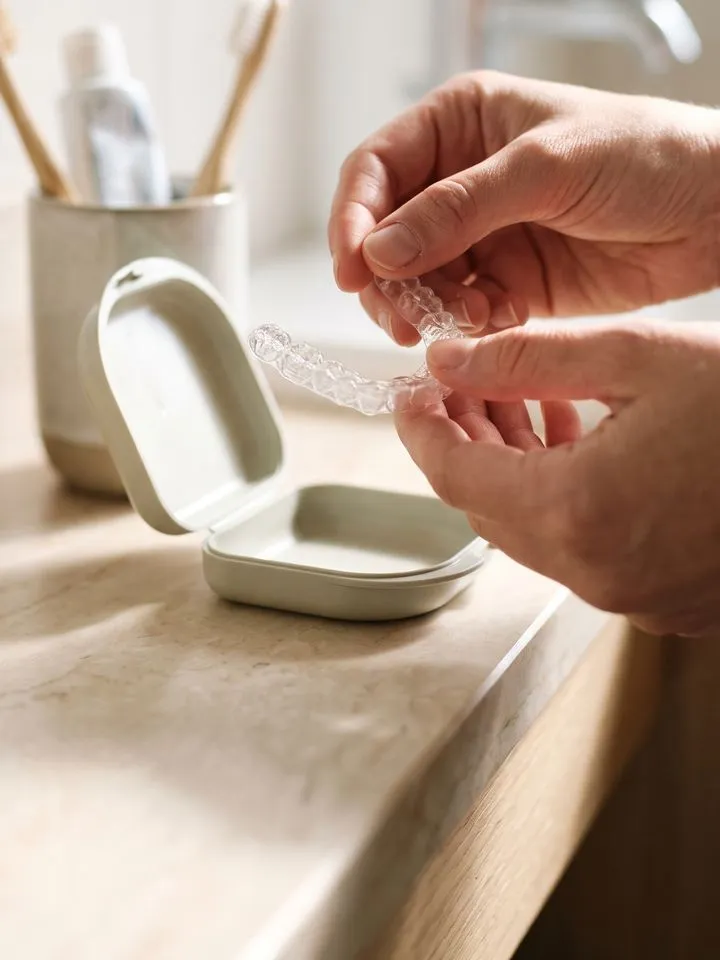
Splints are hard acrylic plates made individually for you. Two different splints are used depending on the type of complaint.
Stabilisation splint (Michigan splint)
Used in the treatment of jaw joint disorders. It is a flat-surfaced splint that covers all the upper teeth. When the mouth closes, the lower teeth touch the surface of the splint evenly; this relaxes the jaw muscles and reduces the load on the joint. It is mostly worn at night. At check-ups, the fit of the teeth on the splint is measured and adjusted.
NTI splint
Used for night-time clenching and grinding. It is a small splint that fits only on the front teeth and prevents the back teeth from touching each other. When the back teeth do not touch, the jaw muscles cannot clench as forcefully; this helps reduce the load on the muscles and the wear on the teeth. It is worn at night.
Because an NTI splint covers only the front teeth, it should be used under a dentist’s supervision. Unsupervised, long-term use can change the bite of the teeth.
Most people who grind their teeth at night are not aware of it; often the person sleeping in the same room notices, or the dentist sees the wear on the teeth. Splints do not stop grinding completely, but they protect the teeth from wear and fractures. Ready-made soft guards are not recommended because they do not fit the teeth exactly; in some people they can make complaints worse.
Orthodontic treatment and the jaw joint
Orthodontic treatment is not a treatment for jaw joint disorders, and it has not been shown to cause them. If a patient with joint complaints needs orthodontic treatment, it is recommended that the complaints are brought under control first and that treatment is planned with the condition of the joint in mind.